
Sloped yards, erosion, and water damage are common problems across Anne Arundel County. If you’re dealing with a leaning wall, a muddy hillside, or standing water near your foundation, wall type, drainage, and footing depth all matter — and getting any one of them wrong leads to costly problems. As a retaining wall contractor serving Anne Arundel County, Better View builds walls designed to manage slope, drainage, and long-term soil pressure correctly from the start.
From Davidsonville, we serve Annapolis, Arnold, Crofton, Edgewater, and Severna Park. Our owners are involved on every project, and every wall is built right the first time.
The Most Common Reason Retaining Walls Fail — and What Good Construction Prevents
Most walls don’t fail because of the stone or block — they fail because of what’s happening behind them. Heavy clay soils common across Anne Arundel County hold water instead of draining it. That water builds pressure against the wall until it leans, cracks, or gives way.
One common rule contractors use is the 1/3 rule: when a wall begins leaning outward more than roughly one-third of its height, repair is usually no longer practical.
An experienced crew spots early failure signs before they reach that point. Proper drainage and structural support are built into every project — not treated as an afterthought.
What causes retaining walls to fail in Davidsonville, MD?
Most retaining walls fail because of what’s behind them, not what you can see. Water pressure, soil movement, and poor footing work all push walls out of position over time. Anne Arundel County’s heavy clay soils make these problems worse.
- Poor or missing drainage behind the wall lets water build up and create hydrostatic pressure that no wall can hold indefinitely
- Shallow or skipped footings leave walls vulnerable to shifting during Maryland’s freeze-thaw cycles
- Wrong wall type for the slope and soil load causes stress the structure wasn’t built to handle
Proper retaining wall construction in Annapolis and across Anne Arundel County addresses all three — drainage plan, correct footing depth, and the right wall for your site.
Four Types of Retaining Walls and Which One Fits Your Yard
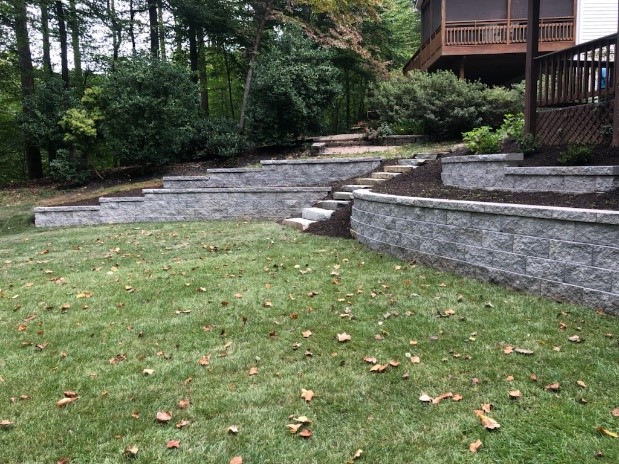
Choosing the wrong wall type for your slope and soil is one of the most common — and costly — mistakes homeowners make. Retaining wall construction starts with matching the wall system to the slope, drainage conditions, and soil load on the property. Here’s a plain breakdown of the four main options:
- Gravity walls rely on their own weight to hold soil. They work well for shorter walls on stable ground.
- Segmental block walls are the most common choice for residential slopes in Annapolis and Arnold. They’re durable, flexible, and handle most loads well.
- Poured concrete walls suit taller applications with heavy surcharge loads — driveways, structures, or significant grade changes.
- Timber walls are low-cost but have a limited lifespan. They’re not recommended for walls holding significant soil load.
For a clearer comparison, guides like This Old House’s overview of retaining walls walk through how each system works and where it’s typically used.
Waterfront properties in Edgewater and along the South River have saturated soils that put extra stress on any wall. Material choice matters more there than on a typical inland property. Our crew walks you through the tradeoffs honestly — without pushing materials you don’t need.
Why Drainage Is the Most Important Part of Any Retaining Wall
A retaining wall without proper drainage is far more likely to fail over time. Heavy summer storms and fall rain hit Anne Arundel County hard. Water that can’t escape builds up behind the wall and creates hydrostatic pressure — the leading cause of wall failure within 3–5 years.
Proper construction includes three basics:
- Gravel backfill directly behind the wall to move water away from the soil
- Weep holes spaced through the wall face to release pressure before it builds
- Drain pipe at the base to carry water away from the footing
We walk through the drainage plan with you before work begins. No hidden steps, no skipped details. Homeowners in Davidsonville and Crofton dealing with wet basements or standing water near existing walls often find drainage — not the wall itself — is where the problem started.
What Happens When Footings Are Skipped or Done Wrong
A wall is only as stable as what it’s sitting on. Maryland’s frost line means the ground moves every winter — soil expands when it freezes and contracts when it thaws. A wall without a proper footing shifts with that movement and rarely recovers.
For a wall two feet or shorter, a well-compacted gravel base at the right depth is the minimum. Taller walls carrying more load need deeper, more substantial footing work to stay plumb through Maryland winters. Clay soil in Severna Park and Arnold moves more than sandy soil — that increases the stakes on every footing decision.
Our owners are on-site during base prep. Footing work isn’t handed off to a crew you’ve never met.
Seven Installation Mistakes That Cause Retaining Walls to Crack, Lean, or Wash Out
If your current wall is failing — or you’re vetting a new contractor — these are the mistakes worth knowing. Steep grades on larger Annapolis and Davidsonville lots make every one of them worse.
- Skipped drainage — No gravel backfill or drain pipe means water pressure does the work for you, eventually.
- Shallow footings — A base that doesn’t account for frost depth will shift. It’s not a matter of if, it’s when.
- Wrong wall type — A gravity wall on a steep, saturated slope isn’t built for that load.
- No batter or setback — Walls built perfectly vertical have no lean into the slope to counter pressure. They push out over time.
- Poor backfill compaction — Loose soil behind the wall settles unevenly and pulls the structure with it.
- Undersized blocks or stone — Materials chosen for cost rather than load capacity fail earlier than they should.
- Ignoring surcharge loads — A driveway, structure, or tree close to the wall adds pressure the original design never accounted for.
A clear process and owner involvement catches these before they’re built in.
How Long a Properly Built Retaining Wall Should Last in Anne Arundel County
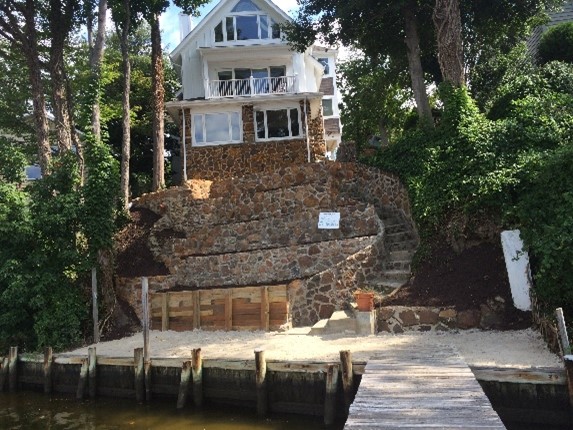
A well-built retaining wall is a long-term investment. Segmental block and natural stone walls last 20–50 years or more when installed correctly. That lifespan is tied directly to installation quality — not just the material you choose.
Coastal humidity, freeze-thaw cycles, and heavy clay soils put more stress on walls here than in drier climates. What shortens lifespan fastest is drainage gaps that let water accumulate, soil movement that goes unaddressed, and root intrusion from nearby trees over time.
If you have questions about coverage for wall damage or failure, your homeowner’s insurance provider is the right place to start.
Once grading is stabilized and usable space is created, retaining walls often become the foundation for larger outdoor living projects. Features like outdoor kitchen installation turn those newly leveled areas into spaces for cooking, gathering, and entertaining.
Why Annapolis Homeowners Work With Better View Landscape
Our owners are on every retaining wall project — not a subcontracted crew you’ve never spoken to. One team handles base prep, drainage, masonry, and finish work from start to finish with no handoffs in between.
We know Anne Arundel County grading, soil conditions, and local permit norms. You’ll hear from us at each phase of the project — no surprises on scope, no surprises on timeline. Our work is visible in neighborhoods across Annapolis, Arnold, Edgewater, Crofton, and Severna Park.
Frequently Asked Questions About Retaining Wall Construction
How do I know if my retaining wall needs to be replaced or just repaired?
Leaning, cracking, or drainage buildup are signs the wall may need a full rebuild rather than a patch. A site visit is the only reliable way to know which path makes sense for your specific situation.
What type of retaining wall works best for sloped yards in Davidsonville?
Segmental block suits most residential slopes and handles a wide range of loads well. Natural stone is a strong choice for larger walls or highly visible areas. The right answer depends on your height, soil type, and what the wall needs to hold.
Do retaining walls in Anne Arundel County require a permit?
Walls over a certain height typically require a permit before construction begins. Our crew is familiar with Anne Arundel County requirements and can help you understand what applies to your project.
How long does retaining wall construction take on a typical property?
Most residential retaining walls take a few days to one week. Length, height, and site conditions all affect the timeline. We give you a clear schedule before work starts.
Can I build a retaining wall myself or should I hire a contractor?
Short decorative walls are DIY-possible for many homeowners. Any wall over two feet that’s holding significant soil load needs proper footings, drainage, and compaction — work that requires experience to do correctly.
What’s the difference between retaining wall construction and retaining wall design?
Design covers layout, material selection, and planning for your property. Construction is the physical build. Better View Landscape handles both — as separate services or combined, depending on what your project needs.
How much does retaining wall construction cost in Anne Arundel County?
Retaining wall construction cost depends on wall height, length, drainage requirements, footing depth, access to the site, and the type of material being installed. Walls built to manage significant slope, saturated soil, or surcharge loads typically require more excavation and structural support than decorative garden walls. During the consultation, Better View reviews grading conditions, drainage needs, and layout requirements before providing a clear project scope.
Ready to Build a Wall That Holds?
We serve Annapolis, Edgewater, Arnold, Crofton, Severna Park, and Davidsonville. Request a free on-site consultation and our owners will respond directly — not a salesperson or scheduler.
One team handles base prep, drainage, masonry work, and finish work from start to finish. Learn more about our masonry contractor services and how we approach permanent hardscape construction. Reach us by phone or through our online form. We respond within one business day.