
At Better View Landscape, we build stone walkways from the ground up, starting with the base you never see. A good path stays flat, drains well, and feels solid underfoot for years. This guide covers when to patch or rebuild, which stone fits your home, and what shapes the price.
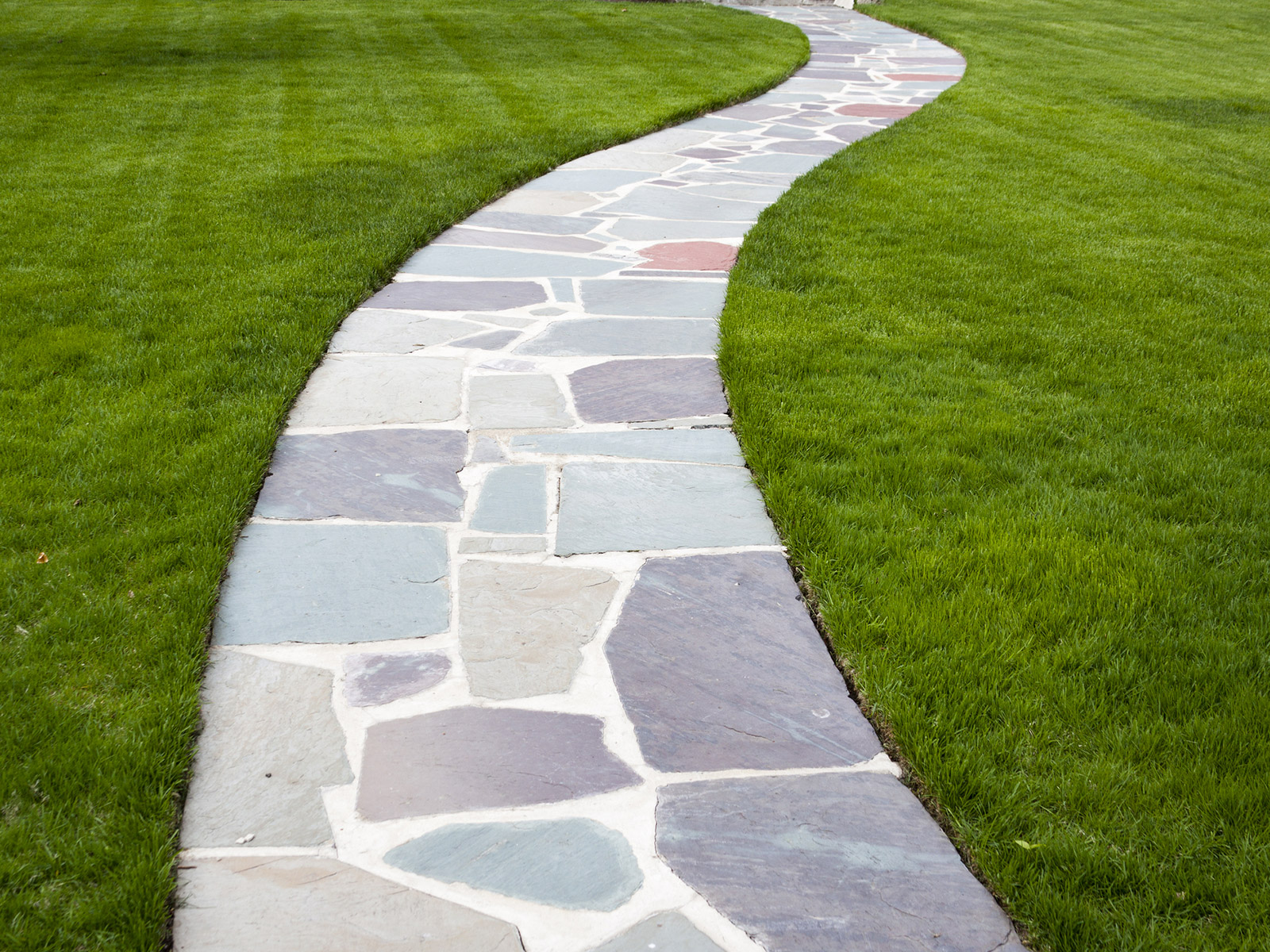
Signs Your Walkway Needs a Rebuild, Not a Patch
A patch fixes one spot on top. A rebuild means digging out the path and laying a new base, even if you reuse your old stone. The right choice depends on the pattern of the damage, not how bad one stone looks.
Stone itself rarely wears out, so the trouble tends to start in the base or the soil below it. These signs point to a problem underneath:
- Stones rock or shift in several places, not just one or two.
- Puddles form in the same low spots after every rain.
- The path looks wavy when you sight down it from one end.
- Stones you’ve reset before have sunk or popped up again.
- Tree roots have lifted whole sections and left trip edges.
- On a mortared walk, joints crack and crumble along long runs.
- Water runs off the walk toward your foundation.
Winters across Anne Arundel County bring plenty of freezing and thawing. Water trapped in a weak base freezes, swells, and pushes stones up. When it thaws, they settle back a little lower and out of line.
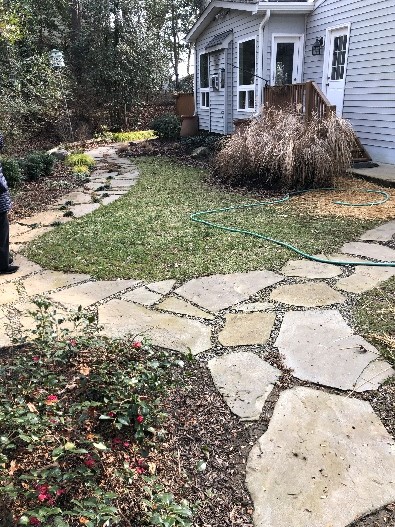
Say the stone by your front steps in Severna Park wobbles, so you reset it in fresh sand. By spring it rocks again, and the stones beside it have dropped too. The soil under that spot is soft or wet, so the fix has to go down that deep.
A patch is still the right call when the problem stays small. When that’s the case, we’ll tell you so.
- One stone cracked from a dropped tool, and the stones around it are level.
- Joint sand has washed out, but the stones haven’t moved.
- Weeds grow in the joints, but the path is still flat and firm.
- One low spot is right below a downspout. Fix where the water goes first, then reset that area.
How a Solid Base Keeps Your Walkway Flat in Edgewater
The stone you pick decides how your walkway looks, but the base decides how long it lasts. Even the best bluestone will shift if the ground under it is soft or wet. That’s why most of our work on a new path happens before a single stone goes down. A solid base is built in layers, and each one has a job:
- Dig out. Topsoil, roots, and grass come out because they break down and settle.
- Pack the subgrade. The soil left at the bottom, called the subgrade, gets packed firm.
- Build the base. Crushed stone goes in and gets packed in thin layers, not dumped all at once.
- Set the slope. The base is shaped so water runs off the walk and away from your house.
- Add a bedding layer. A thin, level layer of sand or fine stone lets each stone lie flat.
- Hold the edges. On a dry-laid path, meaning one set without mortar, edging keeps stones from spreading.
- Fill the joints. The right joint material holds stones in place and lets water drain.
Skip any layer and the walkway will show it within a few winters. A loose base settles unevenly, and a flat path holds water for frost to work on.
Slope matters even more on waterfront lots in Edgewater, where runoff heads toward the South River. A path that sheds water into lawn or planting beds won’t pool or wash soil away. The University of Maryland Extension also explains how permeable hardscapes can help manage stormwater by allowing rain to soak into the ground.
Mortared walks need the same care, because the concrete slab under the stone needs a solid base too. If that base is weak, the slab cracks and the mortar joints crack with it.
Once the stone is down, a thin base and a deep, packed one look the same. The difference shows up a few years later, when one path dips by the steps. That same base-first approach guides our steps and sitting walls as a masonry contractor in Davidsonville.
Flagstone, Pavers, and Cut Stone for Arnold Homes
On a good base, all three common choices can last a long time. So pick the stone that fits your house and how you use the walk every day.
Flagstone is flat natural stone split into irregular shapes that fit together like a puzzle. It suits a relaxed garden path that winds through planting beds. You can set it in gravel or in mortar for a cleaner look, and the split face gives good grip.
Pavers are made pieces, usually concrete, all the same size and thickness. They go down fast in clean patterns and stay easy to keep flat. If one cracks, you can lift it out and swap just that piece. If you plan a paver patio installation, a matching walk helps the whole yard look planned. For older homes with existing brick paths or steps, brick masonry repair or rebuilding may be a better fit than replacing everything with new pavers.
Cut stone, like bluestone or granite, is real stone sawn into squares and rectangles. It suits a formal front walk, like one leading to a historic home in downtown Annapolis. Ask for a textured finish, since a smooth sawn face can get slick when wet. A few practical points help narrow it down:
- Think about who uses it. Strollers, trash cans, and older family members do best on pavers or cut stone.
- Check the sun. Dark stone can get hot enough to bother bare feet near a pool.
- Plan for snow. Tight, even joints are easier to shovel than rough flagstone.
- Match what’s there. Stone that fits your house, steps, or patio usually looks better than a new material.
- Check HOA rules. Some neighborhoods in Arnold and Annapolis review front yard changes, so ask before you choose.
When You Don’t Need a Full Walkway Installation
Not every yard needs a new walkway built from the ground up. Sometimes a simpler path does the job, and sometimes the smart move is to wait.
- The path gets light use. A route to the shed may only need stepping stones or a gravel path with edging.
- Bigger work is coming. Say your Crofton home has a pool or addition planned for next year. Build the walk after that, since trucks and trenching can crack stone and crush a good base.
- The water problem isn’t solved. Sort out grading and downspouts first, or the new walk will sink like the old one.
- A big tree near the path is coming down. Wait until the stump is ground out, because rotting roots let the soil settle.
- Your stone is still good. Solid flagstone, bluestone, or pavers can often be lifted and relaid on a new base, which saves on new material.
- You’re selling soon. Buyers notice a safe, tidy walk, so fixing trip hazards and cleaning the joints may be enough.
Timing matters too, because frozen or soaked ground is hard to dig and pack. In a wet stretch of late winter, plan the layout and pick your stone. Then build once the soil firms up.
What Drives the Cost of a Stone Walkway Up or Down
Most quotes start with square footage, but that alone won’t tell you much. Thicker stone costs more, irregular pieces take longer to fit, and mortared walks need a concrete slab. The rest of the price comes from your yard and the work under the stone.
- Size. A longer or wider path means more digging, more base, and more stone. On larger Davidsonville lots, the route to a back patio can run a long way.
- Access. If a small machine can reach the path, work goes fast. Hauling by wheelbarrow through a narrow side yard takes more labor.
- Tear-out. Pulling up old concrete or a mortared walk and hauling it away takes time.
- Soil and water. Heavy clay, common across Anne Arundel County, may need a deeper dig and more crushed stone.
- Slopes, curves, and trees. A path that climbs may need steps, and cuts around roots add labor.
- Lighting. Walkway lighting is easiest to add while we build, because we can run wire before the stone goes down.
When you compare quotes, look past the bottom line. A lower price can mean a shallower dig, less base, or no edging. A walk that costs more but stays flat beats one you rebuild, so ask each contractor to spell out:
- How deep they’ll dig and how much base goes in
- Whether tear-out and hauling are included
- How they’ll handle drainage near the path
- What edging and joint material they’ll use
- Whether lawn and bed repair is part of the price
Why Homeowners Choose Better View Landscape
When you hire Better View Landscape, the owners are involved in every project. You won’t deal with rotating crews or subcontractors you’ve never met. One team handles both design and build, so your walkway, steps, and plantings come together as one plan.
Before work starts, you get clear pricing, a timeline, and plain expectations. We return calls, keep you updated, and show up when we say we will. We plan around local soil, drainage, and neighborhood styles, so your path looks right and is built to last. Better View is licensed by the Maryland Home Improvement Commission, MHIC# 158957.
Frequently Asked Questions
How long does it take to install a stone walkway?
It depends on the path’s length and how much base work your yard needs. Slopes, steps, tree roots, and drainage fixes all add time. We’ll give you a timeline for your project before work starts.
Can I install a stone walkway myself?
Small patches, like resetting one loose stone or sweeping in joint sand, are fine to do yourself. A full installation is harder, because the base must be dug, packed, and sloped right.
What is the best base material for a stone walkway?
Angular crushed stone, packed in thin layers over firm soil, makes the strongest base. Its sharp edges grip each other when compacted. It should slope so water drains away from your house.
Plan Your Stone Walkway With Better View Landscape
Whether your path is sinking or you’re starting fresh, we’d be glad to take a look. Call us at 410-921-1100 or reach us through our contact form to set up a free consultation.
We serve Davidsonville, Annapolis, Arnold, Crofton, Edgewater, and Severna Park, along with homes across Anne Arundel County. You can see more of our work at betterviewlandscapers.com.